To optimize DeFi yield farming strategies 2024, investors must move beyond static APY screenshots and adopt real-time quantitative tracking across liquidity pools, lending protocols, and liquid staking derivatives. Effective yield management in volatile cycles requires analyzing net returns—subtracting gas fees, slippage, and impermanent loss—against the baseline of risk-free rates.
Real-Time Yield Comparisons for DeFi Strategies 2024
Master DeFi yield farming strategies 2024 with our quantitative analysis of real-time yield comparisons, risk mitigation, and protocol optimization.
Crypto Finance Editorial DeskPublished Aug 5, 2026Updated Aug 5, 20265 min read1,026 words0 views
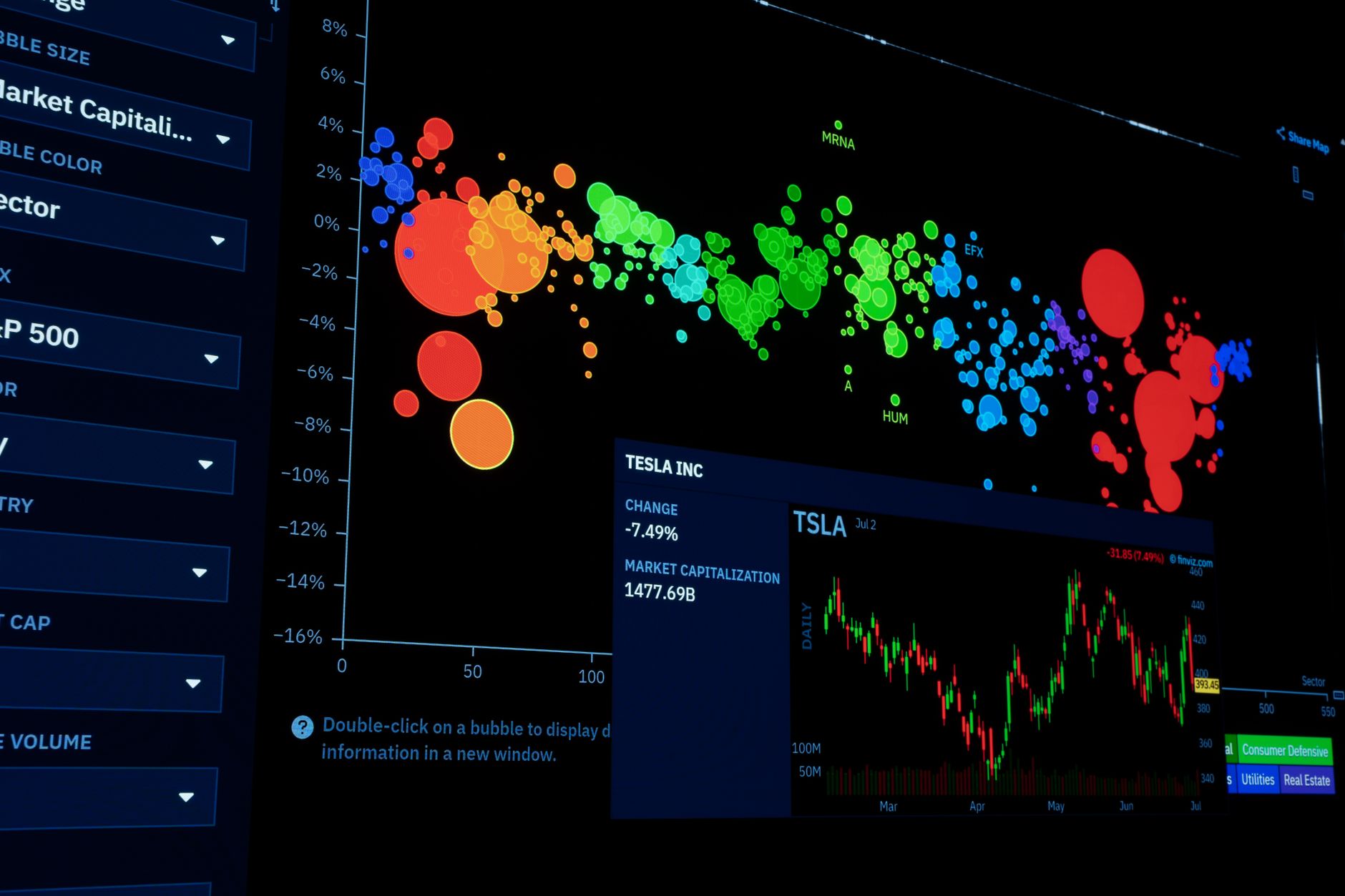
The current decentralized finance landscape has matured into a complex ecosystem of interconnected primitives. As liquidity shifts rapidly between Layer 1 and Layer 2 solutions, the delta between a "best high yield crypto savings account" and a sophisticated liquidity provision strategy can widen or narrow within hours. Navigating this requires more than just looking at a dashboard; it requires an understanding of the underlying mechanics of capital efficiency and protocol risk.
Key takeaways
- Focus on real yield (fees) over inflationary token emissions.
- Calculate net APY by accounting for gas, slippage, and IL.
- Diversify across lending, LP, and liquid staking to manage risk.
- Use real-time data to monitor TVL velocity and utilization rates.
The Yield Paradox in Volatile Cycles
In high-volatility environments, nominal APY (Annual Percentage Yield) is often a deceptive metric. A protocol might offer 100% APY on a new token pair, but if the token's price drops 50% in a single day, the real yield is negative. This is the fundamental challenge of defi yield strategies in 2024: distinguishing between sustainable protocol revenue and inflationary token emissions.
Quantitative analysis allows us to strip away the noise. Instead of chasing the highest number, professional participants look for "real yield"—returns generated from actual transaction fees and lending interest rather than the minting of new governance tokens. As the market shifts toward more sustainable models, the gap between speculative farming and organic yield generation is becoming the primary differentiator for successful portfolios.
Understanding this distinction is crucial, especially as how AI agents and RWA are revolutionizing wealth management suggests a move toward more automated, data-driven decision-making in the space. When volatility spikes, the ability to pivot capital based on real-time data is the difference between profit and liquidation.
Comparative Analysis of Yield Mechanisms
To build a robust portfolio, one must understand the three primary engines of yield: lending, liquidity provision, and liquid staking. Each carries a distinct risk profile and response to market volatility. Lending is the most straightforward, essentially acting as a decentralized version of traditional credit markets. Liquidity provision is more complex, introducing the risk of impermanent loss.
The following table compares the primary DeFi yield archetypes currently dominating the 2024 market cycle:
| Strategy Type | Primary Yield Source | Primary Risk Factor | Volatility Sensitivity |
|---|---|---|---|
| Lending/Borrowing | Interest rate spreads | Smart contract/Liquidation risk | Low to Moderate |
| Liquidity Provision (AMM) | Trading fees | Impermanent Loss | High |
| Liquid Staking (LSD) | Network consensus rewards | De-pegging/Slashing | Low |
| Yield Aggregators | Compounded interest | Complexity/Layering risk | Moderate |
When selecting a strategy, the goal is not to maximize a single variable, but to optimize the Sharpe ratio of your DeFi holdings. This means seeking the highest return for a given level of volatility and risk exposure.
Navigating Impermanent Loss and Slippage
For those engaging in concentrated liquidity provision—a hallmark of advanced DeFi yield farming strategies 2024—impermanent loss (IL) is the silent killer. As prices diverge from the entry ratio, the loss incurred by providing liquidity can easily exceed the fees collected from trades. In volatile cycles, these divergences happen rapidly.
Real-time comparison tools must account for the "break-even" point of a liquidity position. If a pair is highly volatile, the liquidity provider must earn enough in fees to offset the potential IL. This requires a deep dive into historical volatility and volume profiles of specific trading pairs. Relying on static APY calculations without factoring in the potential for price divergence is a recipe for capital erosion.
"In DeFi, the highest nominal yield is often a compensation for the probability of catastrophic divergence; true alpha is found in the delta between perceived risk and actual protocol solvency."
The Role of Real-Time Data in Strategy Optimization
The era of "set and forget" yield farming is over. In 2024, the velocity of capital requires real-time monitoring. A strategy that is optimal at 10:00 AM may be sub-optimal by 2:00 PM due to a sudden shift in gas prices on Ethereum or a liquidity migration to an Arbitrum-based pool. Quantitative tracking allows for the automation of these rebalancing acts.
Investors should focus on these key metrics when comparing protocols:
- Net APY: (Gross APY) - (Estimated Slippage + Gas Costs + Impermanent Loss).
- TVL Velocity: The rate at which Total Value Locked is entering or exiting a protocol.
- Utilization Rate: In lending markets, how much of the available capital is actually being borrowed.
- Protocol Revenue-to-Emission Ratio: The ratio of real fees collected vs. new tokens distributed.
By monitoring these metrics, you can avoid "vampire attacks" where liquidity is lured by high emissions only to exit as soon as the token price stabilizes. This level of scrutiny is what separates professional yield farmers from retail speculators.
Risk Mitigation and Protocol Safety
No discussion of yield is complete without a sober assessment of risk. Even the best high yield crypto savings accounts carry inherent risks including smart contract vulnerabilities, oracle failures, and governance attacks. As the complexity of DeFi protocols increases, so does the attack surface.
A prudent approach involves diversifying across different layers of the stack. Do not concentrate all capital in a single protocol, even if it offers superior yields. Instead, spread exposure across different chains and different types of yield mechanisms. For example, balancing liquid staking derivatives with concentrated liquidity provision can help smooth out the volatility profile of your portfolio.
Furthermore, always consider the regulatory landscape. As markets evolve, understanding the implications of your activities is vital. For those managing larger pools, it is worth consulting an institutional guide to navigating crypto tax rules in 2026 to ensure compliance as reporting requirements tighten.
The bottom line
To succeed in 2024, stop chasing headline APYs and start calculating net returns. Use real-time data to monitor the relationship between fee generation and token emissions. Your next action: audit your current DeFi positions by calculating their net yield after gas and slippage, and ensure your exposure is diversified across at least three distinct yield mechanisms.
Frequently asked questions
+What is real yield in DeFi?
Real yield refers to the returns generated from actual protocol revenue, such as transaction fees or interest paid by borrowers, rather than the issuance of new governance tokens. Real yield is generally more sustainable and less prone to the rapid price crashes associated with high-emission inflationary models.
+How does impermanent loss affect yield farming?
Impermanent loss occurs when the price of the tokens you have provided to a liquidity pool diverges from the price at the time of deposit. This loss can offset the trading fees you earn, potentially resulting in a net loss compared to simply holding the assets in a wallet.
CF
Crypto Finance Editorial Desk
Crypto Finance's editorial desk pairs an AI research pipeline with human review so every article is accurate, useful and free of hype.
Related articles

DeFi
ESG Compliance in DeFi Yield Optimization
Esg Compliant Fintech Solutions: a practical, risk-aware guide covering costs, trade-offs, implementation steps and how to measure results within 90 days.
Editorial DeskAug 8, 20265 min0
DeFi
How to Stake Ethereum: A Guide to Maximizing Yields
How To Stake Ethereum: a practical, risk-aware guide covering costs, trade-offs, implementation steps and how to measure results within 90 days.
Editorial DeskAug 8, 20265 min2

DeFi
Optimizing DeFi Yield via RWA Tokenization
Institutional entry into RWA is transforming DeFi yield optimization strategies. Learn how tokenizing real-world assets creates sustainable, non-correlated returns.
Editorial DeskAug 8, 20264 min1